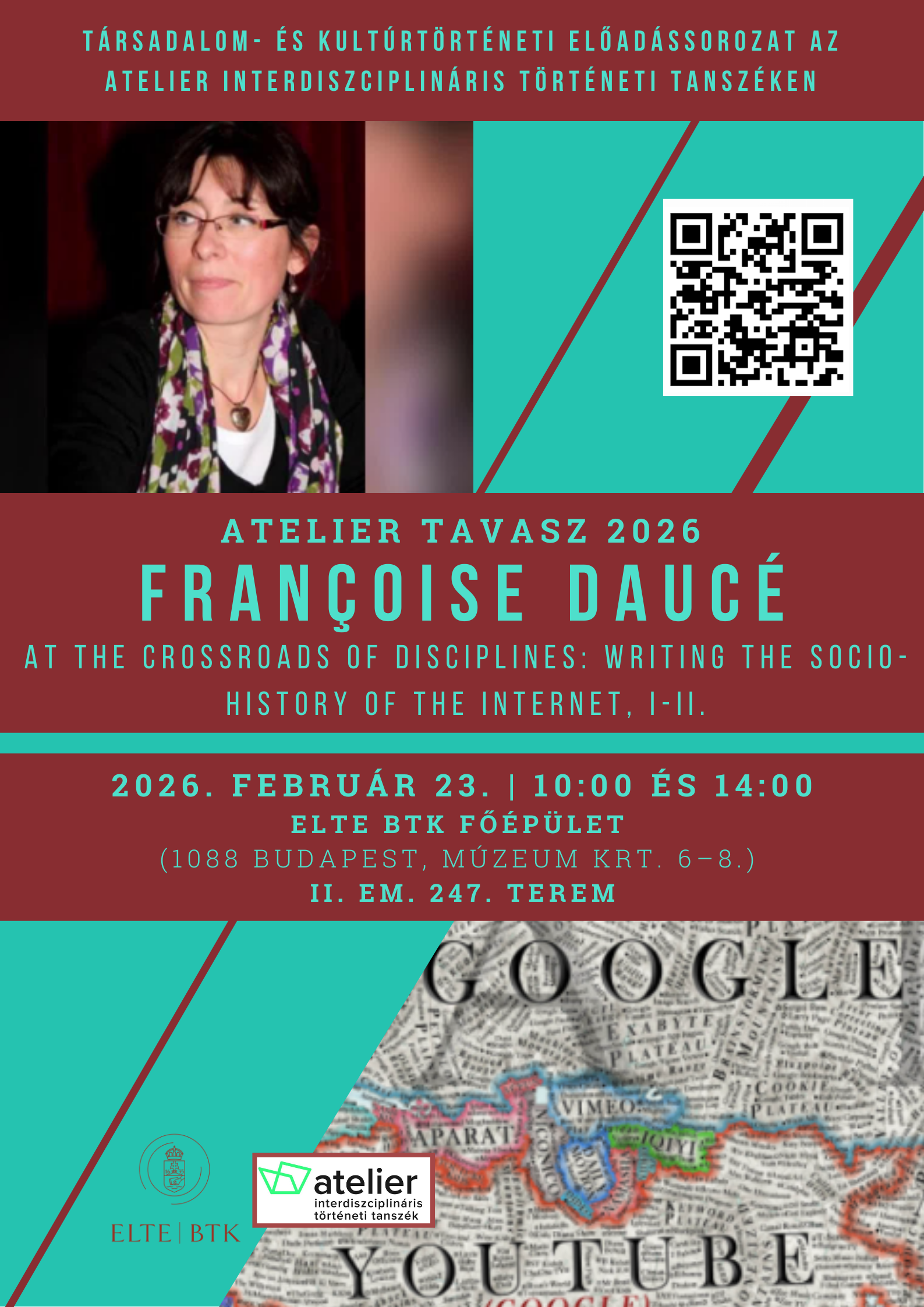
A 2026-os Atelier tavaszt Françoise Daucé nyitja meg

Tanszékünkön idén tavasszal is folytatódik az az előadássorozat, amelynek keretében az Atelier meghívására külföldi egyetemekről érkező vendégprofesszorok mutatják be friss könyveiket, kutatásaikat az ELTE Bölcsészettudományi Karán. Az idén, ismét egy egész tavaszra szóló, öt előadó által bemutatott előadás-sorozatra hívhatjuk a budapesti bölcsészközönséget.
Hagyományainkhoz híven minden előadónk két előadást tart: az első 10:00 és 12:00 között, a második pedig 14:00 és 16:00 között lesz.
Idei sorozatunk első előadója Françoise Daucé, az École des Hautes Études en Sciences Sociales, Paris (EHESS), Centre d’études russes, caucasiennes, est-européennes et centrasiatiques (CERCEC) kutatója.
2026. február 23-án, 10.00 és 14.00 órakor kezdődő, angol nyelvű előadásainak címe: At the crossroads of disciplines: writing the socio-history of the internet, I-II.
Helszín: ELTE BTK, Budapest, Múzeum krt. 6-8. / 247
This spring, our department continues the lecture series in which, at the invitation of the Atelier, visiting professors from foreign universities present their recent books and research at the Faculty of Humanities of ELTE. This year once again, we are pleased to invite the Budapest humanities audience to a lecture series spanning the entire spring semester, featuring five speakers. In keeping with our tradition, each speaker will give two lectures: the first from 10:00 to 12:00, and the second from 14:00 to 16:00.