

Atelier Spring Lecture 3: Jawad Daheur

30.03.2026, 10.00 and 14.00
10.00: Timber Floating in the Galician Carpathians. Regulating Splash Dams in the Early Age of Parliamentarism (ca. 1850-1914)
This presentation discusses the environmental impact and social conflicts associated with using splash dams, an hydrological technology that faciliated timber floating in the Habsburg province of Galicia. In the second half of the nineteenth century, increased political engagement enabled riparian communities to demand accountability and protection against the impact of splash dams. There was widespread opposition to splashing, and the political structure of the Habsburg monarchy permitted formal complaint procedures through the provincial parliament. However, there were significant discrepancies between the legislation and its enforcement, and the economic necessity of splashing made it difficult to curtail. Despite complaints about the practice, splashing continued into the 1900s and was managed through river regulation work. Overall, riparian communities sought improvements through legal means rather than violence, thus demonstrating the potential of the Habsburg parliamentary system to address their grievances.
14.00: Was There a Fuel Crisis in Late 19th-Century Poland? Pressure on Wood Resources and the Search for Alternatives
Research into the environmental and energy histories of Central and Eastern Europe has shown that the widespread use of coal arrived several decades later than in Western Europe. In Galicia and the Kingdom of Poland, wood remained the primary fuel source until at least 1900. However, forest protection policies were unable to solve the problem of shortages, exacerbated by prolonged deforestation, rapid population growth and large-scale timber exports. The rising cost of wood placed households, and even some industries, under considerable strain. Nevertheless, analysis of inter-regional and international flows of materials and energy balances indicates that most Polish regions were not solely subject to energy depletion. In fact, Galicia and the Kingdom of Poland benefited from considerable coal imports from Prussian Silesia, making them net energy importers. In purely energy terms, the quantity of coal imported equalled or exceeded the quantity of timber exported. Nevertheless, this did not solve the problem. This paper encourages us to consider the geography of access to resources and the efficiency of distribution networks at finer spatial scales, rather than focusing solely on macro-level accounting balances. In this case, it is evident that around 1900, as access to wood declined, coal began to emerge, albeit in a highly localised manner.
Venue: ELTE BTK, Budapest, Múzeum krt. 6-8. / 247
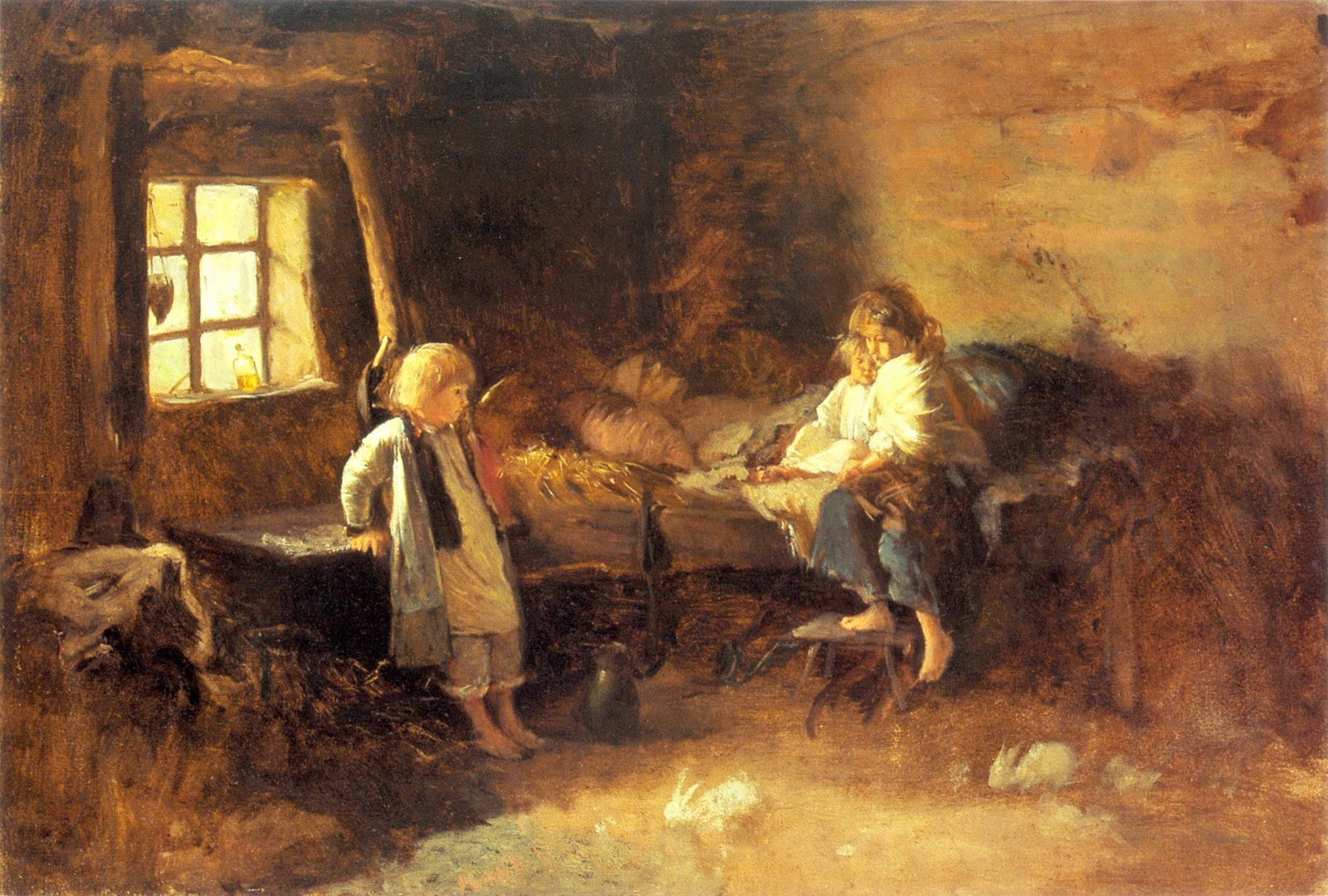
Aleksander Kotsis (1836–1877), Matula pomarli, oil on canvas, 1868